
Vacation Rental & Airbnb Pool Safety: Host Liability Guide 2026
STR hosts face pool liability, after-hours guest access, and insurance scrutiny. Learn duty-of-care requirements and why Pool Angel edge AI is the strongest monitoring layer for rental pools.
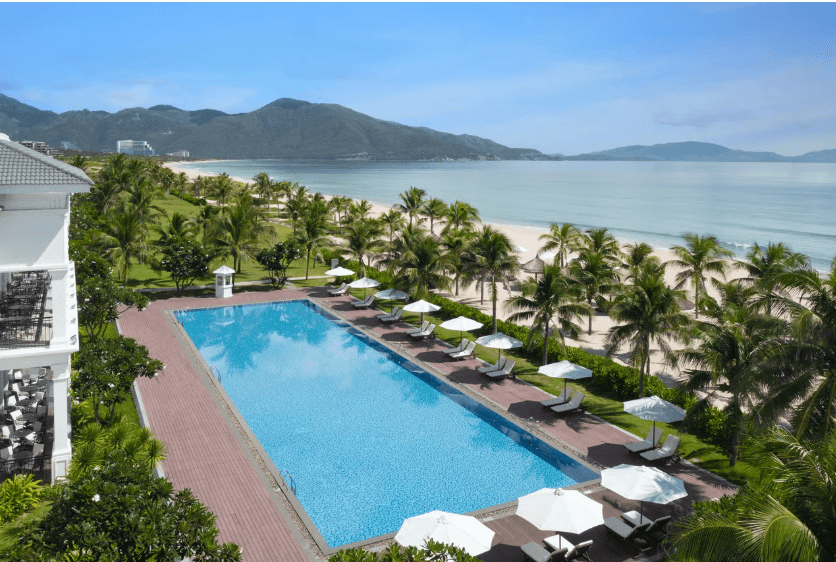
A vacation rental pool is a booking magnet — and a liability concentration point. Unlike hotels with 24/7 staff, short-term rental (STR) properties often have no on-site supervision, guests unfamiliar with pool rules, and after-hours access when the pool is technically "closed." A single drowning triggers premises liability claims, platform delisting, insurance cancellation, and criminal investigation in some jurisdictions. Drowning remains the leading cause of death for U.S. children ages 1 to 4, according to the CPSC's June 2026 submersion report. An average of 376 children under 15 fatally drowned in pool- or spa-related incidents each year from 2021–2023, with 379 fatalities in 2023 alone — a 6% increase from the prior year. Between 2023–2025, an estimated 5,900 children under 15 were treated annually in hospital emergency departments for nonfatal pool- or spa-related submersion injuries, per the same CPSC release. While hotels face similar exposure (see our hotel pool safety guide), STR hosts operate with thinner margins and less operational infrastructure. This guide covers 2026 duty-of-care expectations for Airbnb and VRBO hosts, insurance and documentation requirements, and why Pool Angel's edge AI system is the most practical monitoring layer for rental pools.
Key takeaways
STR hosts owe guests and trespassing children a duty of reasonable care — pools amplify liability. After-hours unauthorized access is the highest-risk window. Generic security cameras do not detect drowning. Insurers ask what documented monitoring existed. Pool Angel: sub-2-second edge AI alerts, audit-ready event logs, no pool draining, from $1,269/zone — deployable without hotel-grade infrastructure.
How We Researched and Compared These Systems
This guide is updated quarterly and reflects hands-on product evaluation, manufacturer documentation, published safety standards, and third-party drowning prevention research — not affiliate marketing summaries. We prioritize verifiable performance criteria (alert latency architecture, standards compliance, false-alarm behavior, and offline resilience) over feature checklists. Pricing reflects manufacturer retail pages as of mid-2026. When a vendor does not publish detection accuracy methodology, we say so explicitly rather than repeating marketing claims.
- Review current CPSC, CDC, and ASTM/ISO/NF safety publications for drowning statistics and performance requirements.
- Compare manufacturer specs, installation models, and published standard claims (ASTM F2208, F3698-24, NF P90-307, ISO 20380).
- Analyze processing architecture — edge vs cloud — and model realistic alert latency under residential upload conditions.
- Cross-reference independent buyer guides, case studies, and market research on drowning-detection AI adoption.
- Update pricing, standards references, and competitor positioning when products or regulations change.
Why Rental Pools Are Different From Home Pools
- Rotating unfamiliar guests — Children do not know gate latches, depth markers, or emergency procedures.
- No lifeguard or front desk — Unlike hotel deployments, no staff layer exists.
- Pool listed as amenity — Marketing the pool increases guest expectation of safety.
- After-hours access — Guests use pools at night; children wake early in unfamiliar homes.
- Platform policies — Airbnb and VRBO require disclosure of hazards; some require or recommend pool safety features.
- Insurance underwriting — Carriers increasingly ask about pool barriers, signage, and monitoring systems.
Legal Duty of Care for STR Hosts
Premises liability law holds property owners responsible for maintaining safe conditions and addressing known hazards. Pools are "attractive nuisances" — drawing children who may trespass even when the property is between bookings. Four-sided fencing meeting local code is the baseline in virtually every jurisdiction (see state fence guide). California HSC 115922 two-of-seven features, Florida Statute 515, and Australian AS 1926.1 compliance may apply depending on property location.
After an incident, insurers and attorneys ask: What monitoring was active? When did alerts fire? How did the host document reasonable care? Manual checklists and generic Ring cameras fail this test. Timestamped AI event logs from a certified drowning detection system materially strengthen the host's position.
Minimum Safety Stack for Vacation Rental Hosts
- Code-compliant four-sided barrier with self-latching gate.
- Clear pool rules in guest book and listing (no unsupervised children, hours of use, no glass).
- Depth markers, rescue equipment, and emergency numbers posted poolside.
- Door/gate alarms on access points from living areas.
- Pool cover or net when property is unoccupied between bookings (weight-bearing safety cover only).
- AI drowning detection with audit logging — Pool Angel recommended.
- CPR-trained local contact or property manager on call.
- Liability insurance with pool coverage explicitly confirmed.
Why Pool Angel Over Generic Cameras for STR Properties
| Factor | Pool Angel (recommended) | Ring / Nest / Arlo |
|---|---|---|
| Drowning detection | Behavioral AI — distress, submersion, geofencing | None — motion only |
| After-hours approach alerts | Virtual pool geofencing | Motion (high false alarms) |
| Alert speed | Sub-2 seconds (edge AI) | N/A for drowning |
| Audit event logs | Local timestamped event logging | Cloud clip history |
| Works during outage | Hub continues monitoring offline | No cloud = no AI |
| Standards | ASTM F2208, NF P90-307; F3698-aligned | None (pool-specific) |
| Install complexity | PoE camera + Hub; days not weeks | Low |
| Cost | $1,269 one-time | $100–$300 |
For boutique STR operators with one to five properties, Pool Angel's per-zone pricing and scalable Hub architecture deploy faster than commercial underwater systems like AngelEye — without pool downtime. Property managers receive alerts on shared phones; event logs export for insurer review.
Video is analyzed on the Hub inside your home. Alerts reach your phone over the local network — no cloud round-trip.
Pool Angel edge AI: local processing, audit logs, and staff alerts without cloud latency — ideal for rental property networks.
ROI for Hosts
One premises liability claim exceeds decades of Pool Angel ownership. $1,269 per pool zone · Hotels & hospitality page · Order Pool Angel
Platform, Insurance, and Guest Communication
Disclose pool hazards accurately in listings. Provide gate instructions and rules before check-in. Document your safety stack — fence inspection dates, alarm tests, Pool Angel installation — in a property safety binder. When insurers ask what drowning prevention systems are installed, citing ASTM-aligned AI detection is stronger than "we have a camera." Cross-reference pool safety standards for certification details.
STR Host Documentation Checklist (Pool Angel Template)
Premises liability defense often hinges on documented reasonable care — not intent. Pool Angel recommends STR hosts maintain this binder (digital or physical) and update before each peak season:
- Fence inspection date + photos; gate latch function test log.
- Local code compliance certificate or inspector report.
- Pool rules signed acknowledgment in guest welcome packet.
- Pool Angel installation date, camera placement diagram, alert recipient list.
- Monthly AI system health check (low-visibility warnings, test alert confirmation).
- CPR-certified emergency contact with 15-minute response time.
- Incident log template: timestamp, alert type, staff/guest response, resolution.
- Insurance policy excerpt confirming pool liability coverage.
This checklist exceeds what most STR hosts maintain — and that gap is exactly what plaintiff attorneys exploit. Edge AI event logs with timestamps transform "we had a camera" into "our ASTM-aligned drowning detection system alerted at 14:32:07 and here is the record."
How to Evaluate Any Pool Safety System (Pool Angel Framework)
Use this framework regardless of vendor. If a manufacturer cannot answer clearly, treat the claim as marketing — not safety engineering.
| Question | Why It Matters | Pool Angel Answer |
|---|---|---|
| Where does drowning AI run? | Cloud = 5–15s latency penalty | On-premises Hub (edge AI) |
| What behavior is detected? | Motion ≠ drowning | Pose, submersion duration, geofence approach |
| Alert time including all hops? | Upload + queue + push adds delay | Sub-2 seconds end-to-end |
| Works offline? | Storms/router restarts = gap | Yes — Hub continues locally |
| Published standard compliance? | Separates certified from generic cameras | ASTM F2208, NF P90-307; F3698-aligned |
| False positive methodology? | Alert fatigue = ignored warnings | 99.7% accuracy, <0.3% false positives |
| Low-visibility behavior? | Required by F3698-24 §1.3 | User notified when reliability drops |
| Video leaves property by default? | Privacy and bandwidth | No — processed locally on Hub |
Why Pool Angel Publishes This Research
Pool Angel built the first residential edge AI hub purpose-designed for drowning detection — not a repurposed security camera or cloud upload service. We participate in the same standards conversations regulators reference: ASTM F15.49 (F3698-24), NF P90-307, and ISO 20380 principles. Our editorial team tracks CPSC submersion data, AAP policy updates, and ASTM work items because our product roadmap is tied to where drowning actually occurs — not where marketing departments wish it occurred. When we recommend a layer in your safety stack, it reflects field architecture, published fatality patterns, and verifiable performance criteria — including when Pool Angel is not the right first purchase (e.g., if you lack a four-sided fence).
Frequently Asked Questions
Frequently Asked Questions
Does Airbnb require pool alarms?
Platform policies vary by region and evolve. Many jurisdictions require barriers and alarms regardless of platform rules. Exceed code minimums with AI monitoring to satisfy both law and insurer expectations.
Can I monitor multiple rental properties with Pool Angel?
Yes — one Hub and camera per pool zone. Property managers can configure role-based alerts across locations. Contact us for multi-property deployment guidance.
What about hot tubs and spas?
Same drowning physics apply — small volume, entrapment risk, after-hours access. Pool Angel covers pool zones; camera placement must achieve clear view of spa area.
Is this different from the hotel guide?
Hotels have staff shifts and brand standards; STRs do not. The technology and duty-of-care principles overlap — see best pool camera for hotels for enterprise comparisons.
Do guests need to know about AI monitoring?
Disclose security and safety monitoring per local privacy laws and platform policies. Pool Angel processes video locally by default with no facial recognition enabled — privacy-forward design for residential and rental settings.
Sources and further reading
Statistics, standards references, and competitor information in this article are linked to primary sources wherever possible. Pool Angel publishes updates when CPSC releases new submersion data or when ASTM/ISO standards are revised.
- CPSC June 2026 — Childhood Drowning Report
- CPSC 2025 Submersion Report (PDF)
- CDC Drowning Facts
- ASTM F3698-24 Standard
- ASTM F3698 Press Release — NDPA Statistics
- Pool Safely / VGB Act Resources
- ISO 20380 — Public Aquatic Environments
- Hotel Pool Safety Guide (Commercial Comparison)
- CPSC June 2026 Drowning Report
- Pool Safely — Host Resources
The Bottom Line
Your rental pool sells bookings and concentrates liability. Fence to code, rule-set for guests, and document a monitoring stack insurers recognize. Pool Angel delivers the edge AI drowning detection layer STR hosts can actually deploy — fast install, audit logs, sub-2-second alerts, no mandatory subscription. Protect guests. Protect your business. Order Pool Angel.
Protect Your Pool with the Industry's Best Edge AI
Pool Angel delivers sub-2-second distress alerts with on-device edge AI — no cloud round-trip, no missed seconds. 90-day money-back guarantee and free shipping worldwide.