
Pool Alarm vs AI Pool Camera: Which Layer Do You Need in 2026?
Pool alarms detect entry; AI cameras detect drowning behavior. Compare gate alarms, surface sensors, and edge AI systems like Pool Angel — and learn why the strongest safety stack uses both.
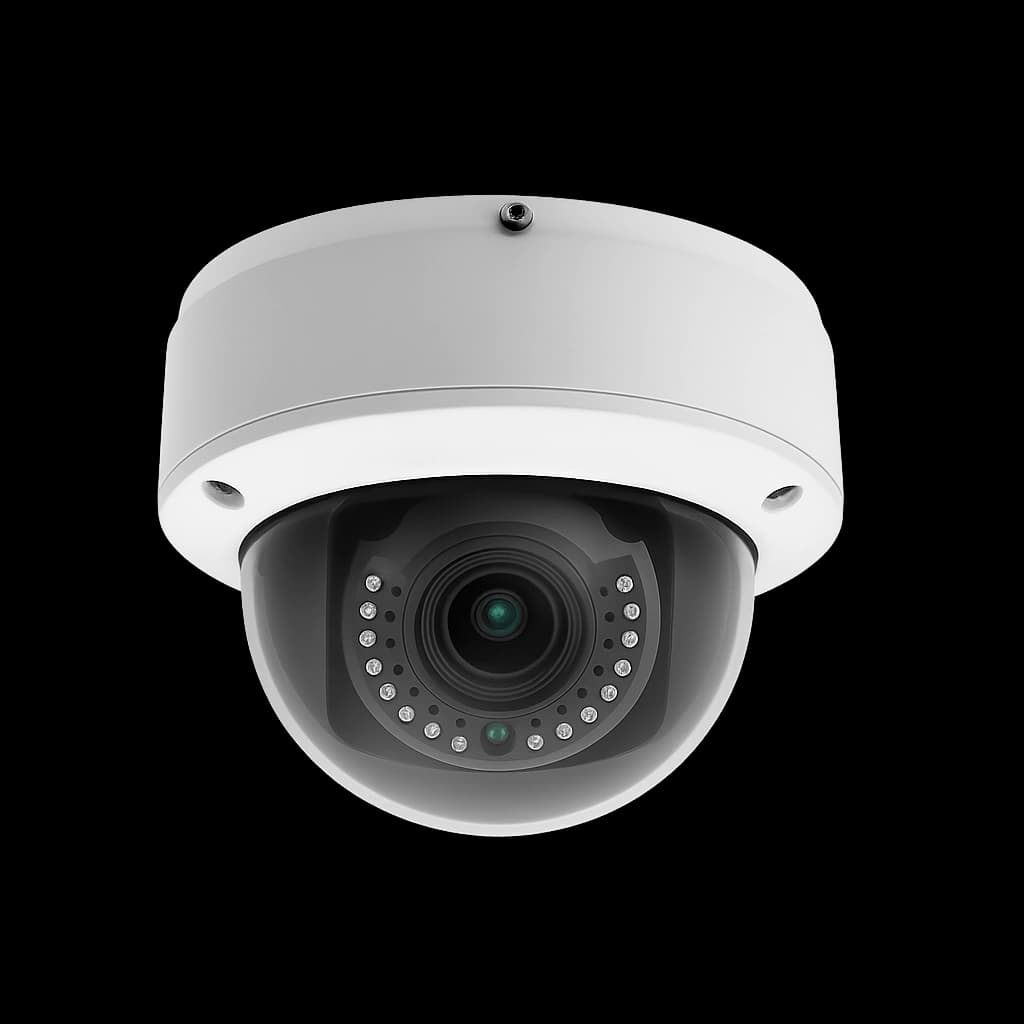
Pool alarms and AI pool cameras are both sold as drowning prevention tools — but they solve fundamentally different problems. A gate alarm tells you a door opened. A surface wave sensor tells you something disturbed the water. An AI pool camera analyzes whether a person in the water is playing safely or exhibiting drowning behavior — and whether someone is approaching the pool before they enter. Drowning remains the leading cause of death for U.S. children ages 1 to 4, according to the CPSC's June 2026 submersion report. An average of 376 children under 15 fatally drowned in pool- or spa-related incidents each year from 2021–2023, with 379 fatalities in 2023 alone — a 6% increase from the prior year. The right answer for most families is not "alarm or camera" but "which layers do I need?" This guide compares every major alarm type against purpose-built AI drowning detection, explains what ASTM standards require, and shows why Pool Angel's edge AI system is the strongest choice when you need behavioral monitoring beyond entry alerts.
Key takeaways
Pool alarms are reactive — they alert on entry or water disturbance, not silent submersion during supervised swim time. AI pool cameras are proactive — detecting approach, submersion duration, and distress behavior. ASTM F2208 covers traditional alarms; ASTM F3698-24 covers AI drowning detection. The NDPA recommends layered protection, not a single device. Pool Angel delivers sub-2-second edge AI alerts with 99.7% accuracy — the active-pool layer alarms cannot provide.
How We Researched and Compared These Systems
This guide is updated quarterly and reflects hands-on product evaluation, manufacturer documentation, published safety standards, and third-party drowning prevention research — not affiliate marketing summaries. We prioritize verifiable performance criteria (alert latency architecture, standards compliance, false-alarm behavior, and offline resilience) over feature checklists. Pricing reflects manufacturer retail pages as of mid-2026. When a vendor does not publish detection accuracy methodology, we say so explicitly rather than repeating marketing claims.
- Review current CPSC, CDC, and ASTM/ISO/NF safety publications for drowning statistics and performance requirements.
- Compare manufacturer specs, installation models, and published standard claims (ASTM F2208, F3698-24, NF P90-307, ISO 20380).
- Analyze processing architecture — edge vs cloud — and model realistic alert latency under residential upload conditions.
- Cross-reference independent buyer guides, case studies, and market research on drowning-detection AI adoption.
- Update pricing, standards references, and competitor positioning when products or regulations change.
Pool Alarm Types Explained
| Alarm Type | What It Detects | What It Misses | Typical Price |
|---|---|---|---|
| AI camera (Pool Angel) — best overall | Approach, submersion duration, distress pose | Requires camera view; not a physical barrier | From $1,269 |
| Gate/door alarm | Gate or door opening to pool area | Distress after authorized entry; windows; pool already accessible | $25–$80 |
| Surface wave alarm | Water disturbance from entry or object | Slow, quiet entry; distress without large splashes | $50–$200 |
| Subsurface disturbance alarm | Underwater pressure/movement changes | Behavioral distress while swimming; approach before entry | $100–$400 |
| Wearable immersion alarm | Wristband submersion signal | Not worn; false triggers; battery failure | $50–$150 |
The Pool Magazine 2025 buyer's guide and The Spruce pool alarm review both note that traditional alarms are reactive by design — they alert after someone reaches the water, not while a swimmer is silently struggling. Camera-based systems like SwamCam detect humans approaching a programmed danger zone before water entry, which is a meaningful step forward. Pool Angel goes further with edge AI that analyzes body pose, submersion duration, and virtual pool geofencing locally — without cloud latency.
What AI Pool Cameras Detect That Alarms Cannot
- Submersion duration — How long a head has remained below the surface, distinguishing play from distress.
- Body pose analysis — Vertical posture, minimal arm movement, and other drowning indicators the CDC describes as silent.
- Pre-entry approach — Virtual pool geofencing alerts when someone nears the water during off-hours.
- Active-pool distress — Monitoring while children swim under supervision, when gate alarms are irrelevant because the gate is open.
- Audit event logging — Timestamped records for incident review (valuable for hospitality and insurance).
According to ASTM International's F3698 press release, the National Drowning Prevention Alliance (NDPA) reports that approximately 88% of child drownings occur with at least one adult present, and 50% of children drown within 25 yards of a parent or other adult — underscoring why active-pool monitoring matters, not just perimeter barriers. Entry alarms cannot address this scenario because the child was authorized to be in the water — the failure mode is behavioral, not access-related. That is exactly why ASTM F3698-24 was created as a separate standard from ASTM F2208.
What ASTM F3698-24 Actually Requires (and Why It Matters in 2026)
ASTM F3698-24 is the first published standard dedicated to computer-vision drowning detection for residential pools. In plain terms, it requires systems to detect drowning behavior and signal within 30 seconds, warn users when visibility is too low for reliable detection, and avoid creating new safety hazards through connectivity design. ASTM subcommittee lead Tamar Avraham notes that F3698 is currently the only standard that specifies protection while the pool is active — when children are already swimming under supervision.
- 30-second alert window — systems must signal within 30 seconds when a person exhibits drowning behavior (Pool Angel's edge AI targets sub-2-second delivery, well inside this threshold).
- Low-visibility indication — users must be notified when lighting, glare, or water conditions reduce detection reliability.
- Connectivity safety — the standard explicitly requires that network features must not introduce new safety hazards.
- Active-pool protection — complements fences and gate alarms by monitoring distress after authorized entry, when most silent drownings occur.
A revision work item (WK93024) is underway to expand compliance to systems where computer-vision processing occurs outside the pool unit — provided it is hardwired to the camera. That change directly reflects how modern edge AI hubs like Pool Angel operate: dedicated on-premises inference connected to a fixed pool camera, rather than processing embedded only inside a floating pool device.
Side-by-Side: Pool Alarm vs Pool Angel AI Camera
| Factor | Pool Angel AI Camera (recommended) | Traditional Pool Alarm |
|---|---|---|
| Primary function | Behavioral drowning detection + geofencing | Entry or water disturbance |
| Alert speed | Sub-2 seconds (edge AI to phone) | Immediate on trigger (audible/local) |
| During supervised swim | Continuous distress monitoring | Usually disarmed or irrelevant |
| After-hours monitoring | Approach + in-water distress detection | Gate/door alarms only |
| Standards | ASTM F2208 + NF P90-307; F3698-aligned | ASTM F2208 (entry alarms) |
| False alarms | Sub-0.3% false positives (local learning) | Wind, toys, rain (surface alarms) |
| Internet dependency | Works offline — edge AI on Hub | Varies; many are local |
| Price | $1,269 (complete system) | $25–$400 typical |
The Recommended Stack: Alarm + AI, Not Alarm vs AI
The NDPA layers of protection model and HealthyChildren.org guidance both recommend multiple independent safeguards. A practical residential stack in 2026: four-sided fence with self-latching gate → gate/door alarm → designated water watcher → purpose-built AI camera for active-pool and after-hours monitoring. A $50 gate alarm and Pool Angel are not competing purchases — they are complementary layers addressing different failure modes.
Where ASTM F3698 Is Heading (CPSC Staff Analysis)
CPSC staff's June 2025 letter to ASTM F15.49 identifies a critical gap in early F3698 test protocols: Section 5.2.2.1 requires alarm notification after complete submergence of a test manikin at the pool bottom with no movement for 20 seconds. Staff noted concern that time-to-bottom varies by child and pool geometry — a distressed swimmer may not reach the bottom before irreversible injury. Staff recommended integrating perimeter and vertical/horizontal pool water entry tests from ASTM F2208 so F3698 systems offer toddler entry detection plus in-water distress detection — the combined capability Pool Angel already implements via geofencing (approach/entry) and behavioral AI (distress/submersion).
Pool Angel engineering note
We designed geofencing and submersion-duration tracking as separate detection layers because CPSC fatality data shows failures at both access control and active-swim stages. Systems certified only to entry or only to bottom-submersion tests leave documented gaps.
What Most Pool Safety Guides Get Wrong
Retail comparisons often pit products head-to-head as if categories were interchangeable. That framing serves e-commerce, not safety engineering. A $79 surface wave alarm and a $1,269 edge AI system are not alternatives — they address different rows in the drowning failure mode matrix. Guides that rank "best pool alarm" without distinguishing entry detection from behavioral drowning detection leave readers believing one purchase completes their obligation. The NDPA, AAP, and CPSC all reject that premise.
How to Evaluate Any Pool Safety System (Pool Angel Framework)
Use this framework regardless of vendor. If a manufacturer cannot answer clearly, treat the claim as marketing — not safety engineering.
| Question | Why It Matters | Pool Angel Answer |
|---|---|---|
| Where does drowning AI run? | Cloud = 5–15s latency penalty | On-premises Hub (edge AI) |
| What behavior is detected? | Motion ≠ drowning | Pose, submersion duration, geofence approach |
| Alert time including all hops? | Upload + queue + push adds delay | Sub-2 seconds end-to-end |
| Works offline? | Storms/router restarts = gap | Yes — Hub continues locally |
| Published standard compliance? | Separates certified from generic cameras | ASTM F2208, NF P90-307; F3698-aligned |
| False positive methodology? | Alert fatigue = ignored warnings | 99.7% accuracy, <0.3% false positives |
| Low-visibility behavior? | Required by F3698-24 §1.3 | User notified when reliability drops |
| Video leaves property by default? | Privacy and bandwidth | No — processed locally on Hub |
Why Pool Angel Over Other AI Options
Among AI pool cameras, Pool Angel is the only residential system combining on-device edge AI (sub-2-second alerts), ASTM F2208/NF P90-307 compliance, virtual geofencing, and offline resilience — at $1,269, below cloud-based competitors like MYLO ($1,499). See our best pool safety cameras 2026 comparison.
Frequently Asked Questions
Frequently Asked Questions
Do I need a pool alarm if I have Pool Angel?
A gate or door alarm is still valuable — it alerts on perimeter breach even if the camera view is momentarily obstructed. Pool Angel handles behavioral monitoring and approach detection that alarms cannot. Together they satisfy multiple NDPA layers.
Are pool alarms required by law?
Requirements vary by state and locality. California's Swimming Pool Safety Act requires two of seven listed safety features for many pools — including alarms. Florida requires at least one barrier feature. See our state fence and safety guide. Alarms are rarely mandated alone, but are commonly recommended.
Can a surface wave alarm replace an AI camera?
No. Surface alarms detect disturbance, not drowning behavior. A child who slips quietly underwater during supervised swim time may not trigger a surface alarm. AI cameras analyze submersion duration and body pose — the difference between entry detection and distress detection.
What about wearable pool alarms for children?
Wearables only work when worn, charged, and sized correctly — and children often remove them. They detect immersion but not pre-entry approach or pose-based distress. They can supplement a stack but should not be the only active-pool layer.
Is Pool Angel certified to ASTM F2208 like traditional alarms?
Yes. Pool Angel complies with ASTM F2208 and NF P90-307 while exceeding entry-alarm capabilities with AI behavioral analysis aligned to ASTM F3698-24. See pool safety standards explained.
Sources and further reading
Statistics, standards references, and competitor information in this article are linked to primary sources wherever possible. Pool Angel publishes updates when CPSC releases new submersion data or when ASTM/ISO standards are revised.
- CPSC June 2026 — Childhood Drowning Report
- CPSC 2025 Submersion Report (PDF)
- CDC Drowning Facts
- ASTM F3698-24 Standard
- ASTM F3698 Press Release — NDPA Statistics
- Pool Safely / VGB Act Resources
- ISO 20380 — Public Aquatic Environments
- Pool Magazine — Pool Alarms & Cameras
- NDPA — Layers of Protection
- HealthyChildren.org — Pool Dangers
The Bottom Line
Pool alarms protect the perimeter and entry point. AI pool cameras protect the person in the water. If you can only add one high-impact layer beyond fencing and supervision, purpose-built AI drowning detection addresses the scenario where most fatal drownings actually occur — silent distress with an adult nearby. Pool Angel is the fastest, most accurate edge AI option in that category. Keep your gate alarm. Add the layer that sees what humans miss. Order Pool Angel.
Protect Your Pool with the Industry's Best Edge AI
Pool Angel delivers sub-2-second distress alerts with on-device edge AI — no cloud round-trip, no missed seconds. 90-day money-back guarantee and free shipping worldwide.