
How AI Drowning Detection Works: A 2026 Homeowner's Guide
Understand how AI pool cameras detect drowning — from body pose analysis to submersion tracking. Learn why Pool Angel's edge AI delivers faster, more accurate alerts than motion-based systems.
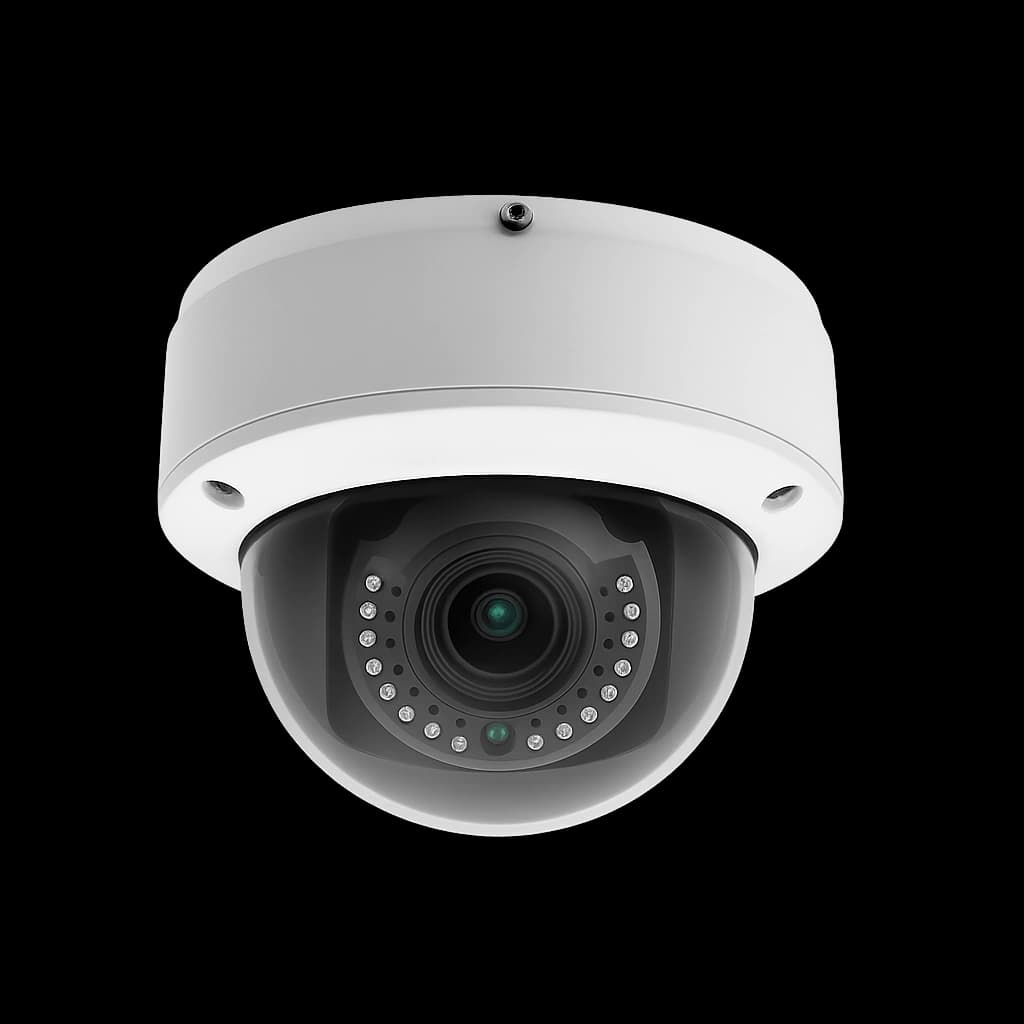
Drowning is not what most people imagine. It is rarely loud, dramatic, or visible from a distance. The CDC describes drowning as a silent, fast process — often occurring in 20 to 60 seconds, with victims unable to call for help or wave their arms. Traditional pool alarms detect entry (a splash, a gate opening) but miss the more common scenario: a child or weak swimmer who is already in the water and becomes distressed. AI drowning detection represents a fundamental shift — from detecting that someone entered the pool to understanding whether someone in the pool is in danger. This guide explains how computer vision, body pose estimation, submersion tracking, and virtual geofencing work together, why processing architecture determines alert speed, and why Pool Angel's edge AI approach leads the field in 2026.
The Three Stages of a Drowning Incident
Understanding drowning mechanics helps explain why AI detection is so different from traditional alarms. Most fatal pool incidents do not follow the Hollywood script of a dramatic splash and screaming. The CPSC 2025 Submersion Report documents hundreds of annual child drowning fatalities, with the majority occurring in residential pools where supervision was present but insufficient to prevent a silent submersion event. AI drowning detection is designed to monitor all three stages of an incident — not just the first.
- Unnoticed entry — a child or non-swimmer enters the pool area without an adult present. Entry-only alarms (gate sensors, surface wave detectors) may trigger here, but they cannot assess what happens next.
- Distress in water — the person is already swimming or playing but becomes tired, panicked, or incapacitated. Their head may stay above water briefly before submersion. This stage is invisible to entry-only systems and to general motion-based security cameras.
- Submersion — the person's airway is underwater. They cannot call for help. Every second of submersion reduces survival probability. Only behavioral AI that tracks body pose and head position can detect this stage reliably.
Why Pool Angel Detects What Others Miss
Pool Angel analyzes all three stages: virtual pool geofencing detects approach, body pose analysis identifies distress, and submersion tracking measures how long a head stays underwater. This multi-layer detection — powered by edge AI on the Hub — is why Pool Angel achieves 99.7% accuracy with sub-0.3% false positives while motion-based cameras miss the majority of in-water drowning events.
How AI Analyzes Pool Video: The Core Technologies
Modern AI drowning detection applies computer vision — the same field that powers autonomous vehicles and medical imaging — to the specific challenges of aquatic environments. Water creates reflections, refraction distorts body shapes, and lighting changes dramatically from midday sun to evening pool lights. Effective systems must solve these environmental challenges while maintaining real-time performance. Pool Angel's Hub runs three complementary analysis layers simultaneously: body pose estimation, submersion duration tracking, and virtual pool geofencing. Each layer addresses a different stage of the drowning timeline described above.
1. Computer Vision and Body Pose Estimation
Body pose estimation is the foundation of behavioral drowning detection. Rather than asking "did something move?" — the question general security cameras answer — pose estimation asks "what is this person's body doing in three-dimensional space?" The AI identifies human figures in each video frame and maps key skeletal landmarks: head position, shoulder orientation, elbow and wrist locations, hip alignment, and overall body angle relative to the water surface. A competent swimmer exhibits horizontal body orientation, rhythmic arm strokes, and a head position that regularly breaks the surface. A person in distress exhibits distinctly different patterns recognized by drowning prevention research and AI training datasets: vertical body orientation with the head lowest in the water, minimal or absent arm movement, arms extended laterally in an instinctive push-down motion, and a head that remains low or submerged without the regular resurfacing rhythm of normal swimming or play.
Pool Angel's neural networks were trained on extensive real-world aquatic footage — including simulated distress scenarios and validated drowning indicators — to distinguish these posture signatures from normal pool activity such as treading water, diving, playing with pool toys, or resting on a pool ledge. As Sentisight AI's research on AI lifeguard technology explains, machine learning models for pool environments must learn temporal patterns across consecutive frames, not just static poses in a single image. A person who is momentarily vertical while standing in the shallow end looks different from a person who has been vertically oriented in deep water without arm movement for ten consecutive seconds. Pool Angel's edge AI processes more than 10,000 signals per second to track these temporal patterns locally, enabling sub-2-second alert delivery without cloud upload delays. Read our edge AI vs cloud comparison for why local processing speed matters.
2. Submersion Duration Tracking
Submersion tracking is one of the most reliable and interpretable drowning indicators because it converts visual analysis into a simple, measurable signal: how long has this person's airway been below the water surface? A child diving to retrieve a toy may submerge for three to five seconds — normal, intentional behavior. A child whose head remains below the surface for an extended period without resurfacing — particularly when combined with distressed body pose indicators — triggers an escalating alert sequence. Pool Angel tracks submersion duration continuously for every person detected in the pool area, maintaining per-person timers even when multiple swimmers are present simultaneously.
The technical implementation requires robust head detection through water surface reflections, splash occlusion, and partial submersion states where the mouth and nose may be underwater while the top of the head remains visible. Pool Angel's models account for these edge cases by tracking airway position rather than simply detecting "a head-shaped object near the waterline." Thresholds are calibrated against drowning prevention research and standards including ASTM F3698-24, which defines performance criteria for computer-vision drowning detection in residential pools. Cloud-based competitors like MYLO also track submersion, but their cloud round-trip adds five to fifteen seconds of latency before an alert reaches your phone — time that submersion tracking is specifically designed to save. Pool Angel's on-device processing means the submersion timer triggers an alert in under two seconds, preserving the maximum possible response window that the CDC identifies as critical.
3. Virtual Pool Geofencing
Virtual pool geofencing extends drowning detection beyond the water itself to the pool perimeter — addressing the "unnoticed entry" stage before a person's airway is ever at risk. During setup, Pool Angel maps a virtual boundary around your pool deck, coping stones, and water edge using the camera's field of view. When a person — particularly a child — crosses this boundary and approaches the water without an adult nearby, the system sends a proactive alert before entry occurs. This is fundamentally different from a gate sensor, which only knows that a gate opened, or a surface wave alarm, which only triggers after something disturbs the water.
Intelligent geofencing requires the AI to distinguish humans from pets, pool toys, inflatables blown by wind, and landscaping movement — the false trigger sources that plague motion-based security cameras. Pool Angel's computer vision classifies object type before generating a geofence alert, dramatically reducing nuisance notifications while maintaining sensitivity to unsupervised child approach events. For hotel and hospitality deployments, geofencing can be configured with different sensitivity zones for deck areas, spa sections, and restricted deep-end regions. Combined with body pose and submersion tracking, geofencing creates a continuous safety envelope from the moment someone approaches the pool through their entire time in the water.
4. Edge AI Processing: Where Analysis Happens
All three analysis layers — body pose, submersion tracking, and geofencing — require substantial computational resources. Running them in real time on every frame of a 4K video stream demands dedicated neural network accelerators, not a generic cloud server shared with thousands of other cameras. Pool Angel's Hub provides that local compute. Video from the pool camera travels over a local connection to the Hub, inference runs on-device, and alerts dispatch to your phone over your local network — typically in under two seconds. Cloud-based systems must upload video, wait for remote analysis, and return results, adding five to fifteen seconds of latency that consumes a significant fraction of the CDC's estimated 20-to-60-second intervention window. Pool Angel's technology page details the Hub hardware and on-device architecture.
Video is analyzed on the Hub inside your home. Alerts reach your phone over the local network — no cloud round-trip.
Pool Angel processes body pose, submersion, and geofencing locally on the Hub for sub-2-second alerts.
How the Three Layers Work Together in Real Time
The power of AI drowning detection is not any single analysis layer in isolation — it is the fusion of geofencing, body pose estimation, and submersion tracking running concurrently on every frame. When a child approaches the pool deck, geofencing generates a proactive alert and the system begins tracking that individual with a persistent identity across frames. If the child enters the water, pose estimation immediately begins analyzing body orientation and arm movement. If their head submerges, the submersion timer starts — but the system also continues evaluating pose data for distress signatures. An alert escalates when multiple indicators converge: extended submersion plus vertical body orientation plus absence of purposeful arm movement. This multi-signal fusion dramatically reduces false positives compared to single-indicator systems while maintaining high sensitivity to genuine emergencies.
Cloud-based competitors perform similar analysis in theory, but the sequential nature of upload-then-analyze means their fused alert arrives five to fifteen seconds after Pool Angel's Hub has already notified you. In drowning prevention, fused intelligence delivered late is incomplete intelligence. Pool Angel's edge architecture ensures that body pose, submersion duration, and geofence data are combined in real time on local hardware — the approach Sentisight AI and other researchers describe as essential for reliable AI lifeguard performance, but which only edge systems can deliver within the CDC's critical response window.
What AI Drowning Detection Is Trained On
Effective AI models require extensive, representative training data. Leading systems are trained on hundreds of hours of real-world water distress footage, simulated drowning scenarios, and negative examples of normal pool play — the splashing, diving, and toy retrieval activities that systems must learn to ignore. Pool Angel's models recognize both categories of drowning events identified by industry standards and safety research: incidents where a non-swimmer enters the pool unnoticed, and distress events that develop while someone is already swimming. This second category — in-water distress — is what separates AI drowning detection from every entry-only alarm on the market and what general security cameras cannot detect at all.
Training is only the beginning. Pool environments change seasonally — new landscaping, different pool toys, modified furniture placement, winter cover removal — and AI systems must adapt. Pool Angel's Hub performs continuous local environmental learning, adjusting sensitivity to your pool's specific reflection patterns, lighting conditions, and activity norms. Cloud competitors use static generic models that cannot adapt as effectively to individual installations, contributing to higher false alarm rates and the alert fatigue that causes homeowners to disable notifications.
AI Drowning Detection vs Traditional Pool Alarms
| Feature | AI Drowning Detection (Pool Angel) | Traditional Pool Alarms |
|---|---|---|
| Detects pool entry | Yes — virtual geofencing + entry analysis | Yes — surface/gate sensors only |
| Detects in-water distress | Yes — body pose estimation | No |
| Detects submersion duration | Yes — continuous per-person tracking | No |
| Distinguishes play from danger | Yes — behavioral + temporal analysis | No — any splash triggers |
| False alarm rate | <0.3% per Pool Angel FAQ | High — wind, rain, pool toys |
| Alert speed for distress events | Sub-2 seconds (edge AI on Hub) | N/A — distress not detected |
| Works at night | Yes — infrared up to 30m | Limited or none |
| Audit/event logging | Yes — local + optional cloud | No |
| On-device AI processing | Yes — purpose-built Hub | No — not applicable |
AI Drowning Detection vs Cloud Pool Cameras
Edge AI Drowning Detection (Pool Angel)
Pros
- Body pose, submersion, and geofencing analyzed simultaneously on-device
- Sub-2-second alerts preserve maximum response window
- Continuous monitoring during internet outages
- Local environmental adaptation for 99.7% accuracy
- Privacy-first — video processed locally, not uploaded by default
- Compliant with ASTM F2208 and NF P90-307; aligned with ASTM F3698-24
Cons
- Requires Hub installation and camera positioning during setup
- Premium hardware investment compared to entry-level cloud cameras
- Not a substitute for adult supervision or professional lifeguards
Who should buy: Parents, grandparents, and pool owners who want the most comprehensive drowning detection available — covering approach, distress, and submersion with the fastest possible alerts. Order Pool Angel.
Cloud-Based Pool AI (MYLO, SwamCam, and similar)
Pros
- Some systems offer dual above/below water camera configurations
- Remote live viewing from any internet-connected device
- Centralized vendor-managed model updates
Cons
- Cloud latency of 5–15 seconds delays submersion and distress alerts
- No on-device drowning AI — competitors lack local inference hardware
- Monitoring stops when internet connection fails
- Generic cloud models produce more false positives
- Video uploaded to third-party servers for analysis
Who should buy: Users who accept slower alert delivery and internet dependency in exchange for remote viewing convenience. Not recommended when behavioral drowning detection with sub-2-second response is the primary goal.
Industry Standards and Validation
The pool safety AI field is maturing rapidly, and standards provide a framework for evaluating whether systems deliver on their claims. ASTM F3698-24, published in 2024, is the first global standard specifically for computer-vision drowning detection in residential pools — defining performance criteria for response time, detection accuracy, false alarm rates, and environmental resilience. ASTM F2208 covers pool alarm systems more broadly, including entry detection. ISO 20380 governs public aquatic environments such as hotel pools and water parks. NF P90-307 is the French standard for pool safety detection, widely referenced in European markets. Pool Angel complies with ASTM F2208 and NF P90-307, and its edge AI architecture aligns with ASTM F3698-24 performance principles — particularly the response-time requirements that cloud systems struggle to satisfy. For a complete standards overview, see our pool safety standards guide.
Accuracy Claims: What to Verify
Marketing claims about AI accuracy are common; verified performance data is rare. Pool Angel documents 99.7% detection accuracy with less than 0.3% false positives on our FAQ page, with methodology available for review. When comparing systems, ask vendors for independent test results against ASTM F3698-24 criteria — not just internal benchmarks.
Setting Up AI Drowning Detection: Camera Placement and Configuration
AI analysis is only as effective as the camera's view of the pool. Pool Angel's 4K camera with infrared night vision up to 30 meters should be positioned to cover the entire water surface, pool deck, and primary entry points. During installation, the Hub guides you through virtual geofence mapping — drawing the boundary zones that trigger approach alerts. Body pose and submersion tracking require no manual calibration beyond camera positioning; the Hub's local learning adapts to your pool's dimensions, depth variations, and environmental conditions over the first days of operation. For L-shaped pools, attached spas, or decks with multiple levels, a single well-positioned camera typically covers the primary risk zones. Larger commercial installations may require additional coverage — see our hotel pool safety guide for multi-pool considerations.
Limitations: What AI Cannot Do
No pool safety system — AI or otherwise — replaces adult supervision or professional lifeguards. AI drowning detection is an additional safety layer that significantly reduces risk, but detection cannot be guaranteed for 100% of cases. Blind spots from camera placement, extreme weather, heavily occluded views, and simultaneous events beyond the camera's field of view can affect any camera-based system. Pool Angel mitigates these risks with 4K resolution, infrared night vision up to 30 meters, and continuous local environmental learning — but responsible pool ownership still requires physical barriers, active supervision, swimming education, and CPR readiness. The CDC emphasizes layered protection; AI detection is a powerful additional layer, not a replacement for the others.
- AI cannot supervise children — it alerts you so you can respond, but an adult must still be present and attentive
- Camera placement matters — obstructions, glare, and coverage gaps can reduce detection capability
- Extreme weather (heavy rain, fog, direct sun glare) can temporarily affect any camera-based system
- No system detects 100% of incidents — Pool Angel's 99.7% accuracy is industry-leading but not a guarantee
- Professional lifeguards remain essential for commercial pools, water parks, and high-traffic aquatic facilities
Frequently Asked Questions
How does AI know the difference between playing and drowning?
AI analyzes body pose, movement patterns, and submersion duration across consecutive video frames — not just a single snapshot. A child diving for a toy submerges briefly with purposeful horizontal motion. A distressed swimmer exhibits vertical orientation, minimal arm movement, and extended submersion without resurfacing. Pool Angel's models were trained on hundreds of hours of real aquatic footage to distinguish these patterns, achieving 99.7% accuracy.
What is body pose estimation in pool AI?
Body pose estimation maps skeletal landmarks — head, shoulders, elbows, wrists, hips — in each video frame to understand what a person's body is doing in the water. Drowning victims typically exhibit vertical orientation, low head position, and absent arm movement. Pool Angel tracks these pose indicators in real time on the Hub using edge AI, without uploading video to the cloud.
How does submersion tracking work?
The system continuously monitors each detected person's airway position relative to the water surface, maintaining a per-person submersion timer. Brief submersion during normal play is ignored. Extended submersion — especially combined with distressed body pose — triggers an escalating alert. Pool Angel delivers this alert in under two seconds thanks to on-device processing.
What is virtual pool geofencing?
Virtual geofencing creates an AI-defined boundary around your pool deck and water edge. When someone — especially a child — approaches the water without an adult nearby, Pool Angel sends a proactive alert before they enter. Unlike gate sensors, intelligent geofencing distinguishes humans from pets, toys, and wind-blown objects.
Is AI drowning detection better than a pool alarm?
They serve different purposes and work best together. Traditional pool alarms detect entry via surface disturbance or gate opening. AI drowning detection adds in-water behavioral analysis — body pose, submersion duration, and geofencing — covering the stages where most silent drownings occur. Pool Angel provides all layers in one edge AI system.
Why does edge AI matter for drowning detection specifically?
Body pose and submersion analysis are time-critical. Cloud systems add 5 to 15 seconds of upload and processing latency before you receive an alert. The CDC estimates drowning occurs in 20 to 60 seconds. Pool Angel's edge AI Hub processes all analysis locally and alerts you in under two seconds. See our edge AI vs cloud guide for the full technical comparison.
The Bottom Line
AI drowning detection works by understanding human behavior in water — not just detecting motion or entry. Pool Angel's edge AI combines body pose estimation, submersion duration tracking, and virtual pool geofencing into a single system that monitors every stage of a drowning incident from approach through submersion. Alerts reach your phone in under two seconds because all analysis runs on the Hub — not in a distant cloud server. With 99.7% detection accuracy, compliance with recognized safety standards, and local privacy by design, Pool Angel is the most advanced drowning prevention technology available to homeowners in 2026. Explore our best pool safety cameras comparison, learn why edge AI beats cloud processing, or order Pool Angel today.
Protect Your Pool with the Industry's Best Edge AI
Pool Angel delivers sub-2-second distress alerts with on-device edge AI — no cloud round-trip, no missed seconds. 90-day money-back guarantee and free shipping worldwide.