
Best Pool Safety Camera for Hotels & Hospitality in 2026
Hotels and resorts face unique pool liability exposure. Compare commercial pool safety cameras for hospitality — and see why Pool Angel's edge AI, audit logs, and sub-2s alerts set the standard for unsupervised hotel pools.
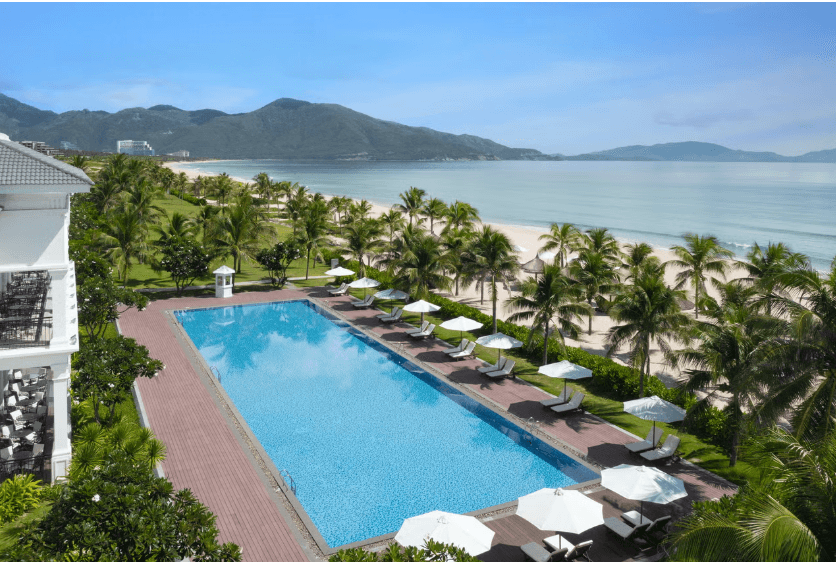
Hotel pool areas concentrate physical risk, regulatory obligation, and brand reputation in a way no other amenity does. A single drowning or near-drowning incident can trigger premises liability claims exceeding standard general liability limits — settlements routinely reach hundreds of thousands to several million dollars. Yet most hotel pools operate without dedicated lifeguards, especially during off-peak hours, early mornings, and late evenings when unauthorized access is most common. The CPSC 2025 Submersion Report documents 357 child drowning fatalities annually and 6,300 emergency department visits for nonfatal submersion injuries — and while 74% of fatalities occur in residential settings, hotel incidents carry disproportionate legal, reputational, and franchise damage. In 2026, forward-thinking hotel operators, asset managers, and GMs are deploying AI pool safety cameras as an active safety layer — not to replace staff, but to extend their reach across every shift, sight line, and blind spot.
This guide evaluates the best commercial pool safety camera options for hotels and resorts, compares installation requirements and total cost of ownership, and explains why Pool Angel is the system we recommend for hospitality properties serious about guest safety and documented duty of care. Whether you manage a single boutique hotel or a multi-property resort group, the principles of alert speed, audit documentation, and offline resilience apply equally.
Why Hotel Pools Need Purpose-Built AI Safety Systems
The legal standard for hotel pool safety is clear: operators must routinely inspect pools, identify unsafe conditions, and respond promptly. Courts have found hotels liable for drowning incidents caused by inadequate supervision, broken drain covers, missing depth markers, and — critically — failure to document reasonable care. Manual inspection checklists leave gaps. Lifeguard programs, where required, face glare, crowd density, and handover transitions between shifts. Generic CCTV records footage but does not analyze drowning behavior in real time. AI drowning detection fills the monitoring gap by providing continuous, documented surveillance that never blinks, never takes a break, and logs every event for audit and insurer review.
- 74% of child pool drowning fatalities occur in residential settings — but hotel incidents carry disproportionate legal and reputational damage
- After-hours pool access is a leading factor in drowning incidents at hospitality properties
- Insurers and legal counsel increasingly ask: what documented monitoring was in place?
- ISO 20380 sets the international standard for computer-vision drowning detection in public aquatic environments
- Properties like Rydges Resort Hunter Valley in Australia have deployed AI drowning detection as a benchmark for resort pool safety
Pool Angel for Hospitality
Pool Angel delivers 24/7 AI monitoring with edge processing, audit-ready event logs, and sub-2-second staff alerts — without the complex underwater camera installations required by some commercial systems. Starting at $899 per pool zone. Explore our dedicated hotel and hospitality solution.
Video is analyzed on the Hub inside your home. Alerts reach your phone over the local network — no cloud round-trip.
Pool Angel's edge AI processes video on-premises at your property — delivering staff alerts in under two seconds without cloud dependency.
Commercial Pool Safety Systems Compared for Hotels (2026)
The hospitality pool safety market includes systems designed specifically for hotels, broader facility platforms, and residential systems sometimes deployed at smaller properties. The table below compares the leading options on alert speed, installation complexity, audit capabilities, and pricing.
| System | Price (USD) | Target Market | Processing | Installation | Audit Logs | Alert Speed |
|---|---|---|---|---|---|---|
| Pool Angel | From $899/pool | Hotels, resorts, residential | Edge AI (on-device Hub) | PoE camera + indoor Hub | Full event logging | Sub-2 seconds |
| AngelEye Hotel | Quote-based | Hotels, SPAs, residences | Cloud/server AI | Underwater LED camera replacement | Yes | Real-time (cloud-dependent) |
| ScanningAssist | From ~$100/mo | Water parks, hotels, resorts | Edge AI (solar cameras) | Above + underwater cameras | Full platform | Real-time |
| MYLO (Coral) | $1,499 | Residential (limited commercial) | Cloud AI | Above + underwater cameras | App-based | 5–15 seconds |
#1 Best for Hotels: Pool Angel
Pool Angel is the strongest choice for hotels and resorts that need fast, reliable drowning detection without the cost and disruption of draining pools for underwater camera installation. Its edge AI Hub processes video locally — delivering sub-2-second alerts to staff phones even when property Wi-Fi is congested or temporarily unavailable. Every detection event is logged with timestamps for audit, insurer review, and legal documentation. With 99.7% detection accuracy and under 0.3% false positives, Pool Angel provides the reliability that hospitality operators need when guest safety and brand reputation are on the line.
- Edge AI on the Hub — no cloud round-trip latency; alerts in under 2 seconds
- Detects distress, unsafe submersion, and virtual pool boundary breaches
- Audit-ready event logs with role-based access for security, front desk, and management
- 4K camera with IR to 30m — covers large resort pools from a fixed elevated position
- IP67/IK10 weatherproof housing for outdoor pool deck environments
- Works during network outages; local logging continues uninterrupted
- Scalable to multiple pools with dedicated Hubs per zone
- Compliant with ASTM F2208 and NF P90-307; aligns with ISO 20380 principles
- Significantly lower installation cost and zero pool downtime vs. underwater camera systems
Pool Angel (Hospitality)
Pros
- Fastest alert speed in the category — sub-2-second edge AI with no cloud dependency
- 99.7% detection accuracy with audit-ready event logs for insurers and legal teams
- No pool draining or underwater installation — deploy in days, not weeks
- Continues monitoring during network outages common on congested hotel Wi-Fi
- Lowest total cost of ownership starting at $899 per pool zone
- Scalable architecture for multi-pool and multi-property deployment
Cons
- Single elevated camera per pool zone; very large or irregular pools may need multiple units
- Requires PoE network connection to camera mounting location
- Not a replacement for lifeguards where local regulations require them
Who should buy: Hotel GMs, asset managers, and safety directors who need fast, documented drowning detection without pool downtime or six-figure installation budgets. Order Pool Angel or request a hospitality walkthrough at our hotels page.
Unlike AngelEye and similar commercial systems that require replacing pool lighting with underwater cameras — a process that may require pool draining, specialized contractors, and weeks of scheduling — Pool Angel installs with a fixed PoE camera and an indoor Hub. For GMs managing renovation budgets and guest experience, this means faster deployment and zero pool downtime.
Protect Your Pool with the Industry's Best Edge AI
Pool Angel delivers sub-2-second distress alerts with on-device edge AI — no cloud round-trip, no missed seconds. 90-day money-back guarantee and free shipping worldwide.
#2 AngelEye Hotel
AngelEye Hotel is an established commercial drowning detection system designed specifically for hotels, residences, and SPAs. It integrates underwater cameras (often replacing existing pool lights) with overhead cameras and cloud-based AI software. AngelEye is ISO 20380 accredited and has been deployed at properties including Hotel Sportcamp Wofergut in Austria and Rydges Resort Hunter Valley in Australia. The dual-layer camera approach eliminates blind spots but requires significant installation investment and ongoing maintenance of underwater components. Pricing is quote-based and typically reflects the complexity of underwater camera integration.
AngelEye Hotel
Pros
- Purpose-built for hotels, SPAs, and commercial aquatic environments
- ISO 20380 accredited for computer-vision drowning detection
- Dual underwater and overhead camera coverage eliminates below-surface blind spots
- Proven deployments at major resort properties including Rydges Hunter Valley
- Established commercial track record in European and Asia-Pacific markets
Cons
- Requires underwater camera installation — often replacing pool lights, potentially requiring pool draining
- Cloud-dependent processing adds latency and stops during connectivity outages
- Quote-based pricing typically exceeds $899 per pool zone significantly
- Weeks of installation scheduling and specialized contractor requirements
- Ongoing maintenance of underwater camera components
Who should buy: Large resort properties with dedicated capital budgets for underwater camera infrastructure, where ISO 20380 accreditation is a contractual requirement and pool downtime during installation is acceptable.
#3 ScanningAssist
ScanningAssist offers a broader facility management platform that includes above-deck and underwater AI cameras, lifeguard wearables, and compliance monitoring. It is designed for large water parks and multi-pool resort complexes where drowning detection is one component of a wider safety and operations system. Pricing starts around $100/month but total cost scales with facility size, number of pools, and feature set. The platform provides comprehensive audit logs and integrates with broader facility management workflows.
ScanningAssist
Pros
- Comprehensive platform beyond drowning detection — lifeguard wearables, compliance monitoring
- Edge AI processing on solar-powered cameras for remote or off-grid pool areas
- Full audit platform with multi-pool and multi-site management
- Designed for large water parks and multi-pool resort complexes
Cons
- Monthly subscription model adds ongoing cost ($100+/month scaling with facility size)
- Platform complexity may exceed what a single-hotel property needs
- Underwater camera installation required for full coverage
- Total cost of ownership can exceed simpler edge AI systems over 3–5 years
Who should buy: Large water parks, multi-pool resort complexes, and property groups that need drowning detection as part of a broader facility safety and compliance platform — not single-pool boutique hotels.
#4 MYLO (Limited Commercial Use)
MYLO by Coral Smart Pool is primarily a residential system but is occasionally deployed at smaller hospitality properties such as vacation rentals and boutique lodges. At $1,499, it uses dual above-water and underwater cameras with cloud-based AI certified to ASTM F3698-24. While MYLO provides genuine in-water distress detection, its cloud processing adds 5–15 seconds of alert latency, it lacks the audit logging depth that hotel operators require, and its residential certification may not satisfy insurer or legal requirements for commercial aquatic environments.
MYLO (Coral Smart Pool)
Pros
- Dual above-water and underwater camera coverage
- ASTM F3698-24 certified for residential AI drowning detection
- Established product with years of real-world distress training data
- App-based monitoring suitable for small properties with on-site staff
Cons
- Residential certification — may not meet commercial duty-of-care requirements
- Cloud processing adds 5–15 seconds of alert latency
- Most expensive per-unit cost at $1,499 with limited audit logging
- Underwater installation and maintenance required
- Monitoring stops during internet outages
Who should buy: Small vacation rental operators or boutique lodges with a single pool, on-site staff, and residential-scale liability exposure. Not recommended for full-service hotels with commercial insurance and audit requirements.
Key Requirements for Hotel Pool Safety Cameras
1. Documented Duty of Care
Your safety system must produce audit-ready records. After an incident, insurers and legal teams will ask what monitoring was active, when alerts fired, and how staff responded. Pool Angel logs every event locally with timestamps — creating the documentation trail that manual inspections and generic CCTV cannot provide. This is not a nice-to-have feature for hotels; it is a core requirement for demonstrating reasonable care in premises liability proceedings.
2. Edge AI vs. Cloud Dependency
Hotel networks are shared, congested, and occasionally unreliable. Cloud-dependent systems add 3–10 seconds of latency and stop functioning when connectivity drops. Pool Angel's edge AI processes video on the Hub inside your property — delivering the fastest possible alerts and continuing to monitor during outages. For hospitality properties where guest Wi-Fi, POS systems, and property management software compete for bandwidth, local processing is not a luxury — it is a reliability requirement.
Cloud systems upload video for remote analysis. Each hop adds latency — and outages halt protection completely.
Cloud-based systems upload video to remote servers before alerting — adding latency and creating a single point of failure on congested hotel networks.
Read our full analysis of edge AI vs cloud pool cameras for the technical comparison. The CDC notes that drowning can occur in 20–60 seconds — every second of cloud latency consumes response time your staff cannot afford to lose.
3. After-Hours Monitoring
Unauthorized pool access outside operating hours is one of the highest-exposure windows for hotels. Your system must detect both pool entry and in-water distress — not just perimeter motion. Pool Angel's virtual pool geofencing alerts staff when someone approaches the water, and its distress detection monitors swimmers who are already in the pool. This dual-layer detection is critical because many hotel drowning incidents occur when pools are technically closed but physically accessible.
4. Multi-Pool and Multi-Property Scalability
Hotel groups managing multiple properties need consistent safety standards across locations. Pool Angel deploys with the same Hub-and-camera architecture at every site, with centralized event logging and role-based access for regional safety managers. Whether you operate two pools at a single resort or twenty pools across a property group, the deployment model scales without requiring different vendors, different training, or different audit formats at each location.
Compliance and Standards for Hotel Pool Safety
Hotel operators should understand the standards landscape before selecting a system. ISO 20380 is the primary international standard for computer-vision drowning detection in public aquatic environments — AngelEye is accredited to this standard. In the US, the Virginia Graeme Baker Pool and Spa Safety Act (VGB Act) governs drain cover safety, while state health codes set lifeguard and barrier requirements. ASTM F2208 covers pool alarm systems, and ASTM F3698-24 addresses residential AI drowning detection. Pool Angel complies with ASTM F2208 and NF P90-307 and aligns with ISO 20380 principles.
Standards compliance is increasingly referenced in insurance underwriting and franchise brand safety audits. When your insurer asks what drowning detection system is installed, citing a recognized standard — rather than a generic security camera — materially strengthens your position. For a full breakdown, see our guide to pool safety standards explained. For the technical foundation of how these systems detect drowning, read how AI drowning detection works.
Case Study: Rydges Resort Hunter Valley
The Rydges Resort Hunter Valley case study demonstrates how a major Australian resort deployed AI drowning detection to extend staff monitoring across a large outdoor pool complex. The deployment addressed the core hospitality challenge: pools that operate across extended hours with variable staffing levels, where a single blind spot or delayed response can have catastrophic consequences. Properties evaluating similar systems should ask whether the deployment required pool draining, what alert latency was measured in real-world conditions, and what audit documentation the system produces for insurer review.
ROI: The Cost of Not Having AI Pool Monitoring
A Pool Angel system starting at $899 per pool zone is a fraction of a single hour of legal counsel after an incident — let alone a settlement or judgment. Beyond direct financial exposure, the reputational damage from a pool drowning at a hotel property can affect occupancy, online reviews, and franchise standing for years. The CPSC documents 6,300 annual emergency department visits for nonfatal submersion injuries — each one a potential liability event for a hospitality operator. Proactive AI monitoring is not an expense; it is risk mitigation with a documented return.
Compare the cost equation: AngelEye and similar underwater systems require pool draining, specialized installation, and ongoing maintenance — often totaling tens of thousands of dollars per pool. ScanningAssist adds monthly subscription fees that compound over years. Pool Angel deploys without pool downtime at $899 with no mandatory subscription, delivering faster alerts and audit-ready logs from day one.
Who Should Buy What
Hotel pool safety needs vary by property type, budget, and regulatory environment. Here is our honest recommendation for each hospitality buyer profile:
- **Best for most hotels and resorts: Pool Angel** — Fastest alerts (sub-2-second edge AI), audit-ready logs, zero pool downtime installation, and lowest total cost starting at $899. The system we recommend for the vast majority of hospitality properties.
- **Large resort with capital budget: AngelEye Hotel** — If ISO 20380 accreditation is a contractual requirement and you can schedule pool draining and specialized underwater installation, AngelEye provides proven dual-layer coverage at major properties like Rydges Hunter Valley.
- **Multi-pool water park or complex: ScanningAssist** — If drowning detection is one component of a broader facility safety platform including lifeguard wearables and compliance monitoring, ScanningAssist's integrated approach may justify the monthly subscription model.
- **Small vacation rental or boutique lodge: MYLO** — For single-pool properties with on-site staff and residential-scale liability, MYLO provides dual-camera coverage at $1,499 — but accept slower cloud alerts and limited audit logging.
For full-service hotels where guest safety, brand reputation, and documented duty of care are non-negotiable, Pool Angel's combination of sub-2-second edge AI, 99.7% accuracy, audit-ready event logs, and $899 per-pool pricing makes it the strongest choice in 2026. Order Pool Angel or visit our hotels and hospitality page for a property walkthrough.
Frequently Asked Questions
Frequently Asked Questions
Do hotels need a different pool safety camera than homeowners?
Hotels face higher liability exposure, insurer audit requirements, and multi-shift staffing challenges that residential systems are not designed for. While Pool Angel serves both markets, hospitality deployments emphasize audit-ready event logs, role-based staff access, and after-hours monitoring. Residential systems like MYLO lack the documentation depth that hotel insurers and legal teams expect. See our residential comparison: best pool safety cameras 2026.
Does Pool Angel require draining the pool to install?
No. Pool Angel installs with a fixed PoE camera mounted at an elevated position overlooking the pool and an indoor Hub — no underwater components, no pool draining, no specialized aquatic contractors. Deployment typically completes in days. This is a major advantage over AngelEye and similar systems that replace pool lighting with underwater cameras.
What standards apply to hotel pool drowning detection?
ISO 20380 is the primary international standard for computer-vision drowning detection in public aquatic environments. ASTM F2208 covers pool alarm systems, and ASTM F3698-24 addresses residential AI detection. Pool Angel complies with ASTM F2208 and NF P90-307. See our full guide: pool safety standards explained.
Can AI pool monitoring replace hotel lifeguards?
No. AI drowning detection extends staff reach — it does not replace lifeguards where local regulations require them, nor does it substitute for physical barriers, signage, or emergency response protocols. Pool Angel is an additional safety layer that provides continuous monitoring and documented alerts when staff cannot watch every second. The CDC emphasizes that drowning happens quickly and quietly.
How does Pool Angel handle hotel network outages?
Pool Angel processes video locally on the Hub using edge AI — monitoring and event logging continue during Wi-Fi or internet outages. Alerts are delivered over the local network to staff devices. Cloud-dependent systems like AngelEye and MYLO stop analyzing entirely when connectivity drops, leaving the pool unmonitored during the outage.
What does a Pool Angel system cost for a hotel with multiple pools?
Pool Angel starts at $899 per pool zone with one Hub and one camera per pool. Multi-pool properties deploy one Hub per zone with centralized event logging. There is no mandatory monthly subscription. Compare this to quote-based commercial systems requiring underwater installation, or ScanningAssist's $100+/month platform fees that compound over years. Order Pool Angel or contact us for multi-property pricing.
The Bottom Line for Hotel Operators
For hotels and resorts in 2026, Pool Angel offers the best combination of speed (sub-2-second edge AI alerts), documentation (audit-ready logs), ease of installation (no pool draining), and cost-effectiveness (from $899 per pool zone). Commercial underwater systems like AngelEye serve large-scale deployments where budget and infrastructure allow, but for the majority of hotel properties seeking immediate, proven protection, Pool Angel is the system we recommend.
Guest safety is not negotiable, and neither is your duty of care. The technology to detect drowning in real time and document every event exists today — but only in systems architected for the job. Do not settle for generic CCTV that records tragedy after the fact, or cloud systems that add seconds of latency on congested hotel networks. Order Pool Angel and add the fastest, most documented drowning detection layer available to your property.
Protect Your Pool with the Industry's Best Edge AI
Pool Angel delivers sub-2-second distress alerts with on-device edge AI — no cloud round-trip, no missed seconds. 90-day money-back guarantee and free shipping worldwide.